


Two weeks ago, I wrote about caring what other people think, and why the goal isn’t necessarily to stop caring.
Since then, I’ve been thinking about something that can be harder to recognize:
How do you know when someone else’s opinion has started to outweigh your own?
It isn’t always obvious. No one may be pressuring you or telling you what to do. But you may find yourself anticipating how someone might react and begin adjusting before they’ve said a word.
Perhaps you change your answer after seeing disappointment on someone’s face. You agree to something you don’t really want to do. You explain a decision far more than necessary because you desperately want the other person to understand.
Or maybe you already know what you want, but immediately start searching for someone to tell you it’s okay.
📖 A New Project Taking Shape
I’m working on a new book, Highly Sensitive, Introverted, or Socially Anxious?, drawing on my personal experiences with sensitivity, introversion, and social anxiety.
I look forward to sharing more as the book takes shape. Details coming soon.
Notice What Happens Before You Change Your Mind
For highly sensitive people, another person’s reaction can carry a lot of weight. We may perceive a change in tone, a facial expression, or a little less warmth than usual.
Sometimes our observations are correct, and someone really is disappointed or unhappy. But here’s something I’ve had to learn:
Noticing someone’s reaction doesn’t mean I have to do something about it.
That’s where it can help to become curious about what happens inside you.
Suppose a friend asks you to do something and your first thought is, I’d rather not. Then you imagine the disappointment. Almost immediately, I’d rather not becomes: Maybe I should.
What happens between those two thoughts is worth noting.
When Discomfort Shows Up
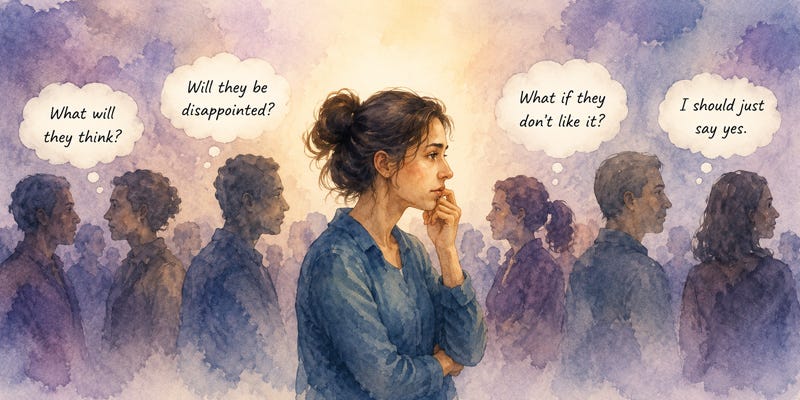
The difficult part often comes next. You make the choice that feels right to you, and someone doesn’t like it. If you’re accustomed to keeping the peace, that discomfort can feel like evidence that something has gone wrong.
But discomfort and wrongdoing aren’t the same thing.
Sometimes discomfort simply means you’re doing something unfamiliar. Perhaps you’re allowing another person to be disappointed, expressing a preference instead of automatically accommodating someone, or resisting the urge to explain yourself until everyone agrees.
That can feel uncomfortable even when your decision is perfectly reasonable, but the truth is:
Part of learning to trust yourself is becoming comfortable with not having everyone’s approval.
Something to Notice This Month

Over the next few weeks, pay attention to the small decisions rather than the big ones.
Notice when you do any of the following:
Say ‘yes’ before considering whether you want to.
Change your opinion after seeing someone’s reaction.
Feel compelled to justify a perfectly reasonable choice.
Look for reassurance before trusting your own judgment.
Feel guilty simply because someone else is disappointed.
You don’t have to correct yourself every time.
Just notice.
Then ask:
What did I want before I started worrying about their reaction?
You may decide to do exactly what the other person wants. That’s okay. The goal isn’t to become less considerate. The goal is to make sure your voice was part of the decision too.
For Adults
As we get older, other people’s expectations can become so familiar that we stop noticing them. Perhaps you’ve spent years being the dependable one, followed the expected career path, or made choices around the needs of a partner or family.
At this stage of life, it can be worth asking:
Am I still making this choice because it feels right for me, or because I’ve become accustomed to what others expect?
You don’t have to regret past choices to reconsider what you want now.
For Young Adults
When you’re building a career, navigating relationships, and figuring out who you want to become, other people’s reactions can feel especially important. Parents, friends, partners, and coworkers may all have opinions about the choices you make.
Advice can be valuable, but this is also when you’re learning to trust your own judgment. Before automatically following someone else’s expectations, ask yourself:
What would I choose if I weren’t worried about disappointing anyone?
Small decisions are a good place to start.
A Moment to Reflect

Think about one recent situation in which someone else’s reaction influenced your choice. If you knew they wouldn’t be disappointed, angry, or judgmental, would you have made the same decision?
If the answer is no, don’t criticize yourself for it. Just be curious about what your answer might be telling you.
Sometimes self-trust begins not with making a different choice, but with recognizing that you had a choice in the first place.
From one sensitive soul to another,
Cliff Harwin
Onward & Upward
Explore more insights on Cliff Harwin’s Highly Sensitive Thoughts Blog. Each post offers encouragement, practical wisdom, and real-life reflections to help you live with greater confidence, calm, and self-understanding.
